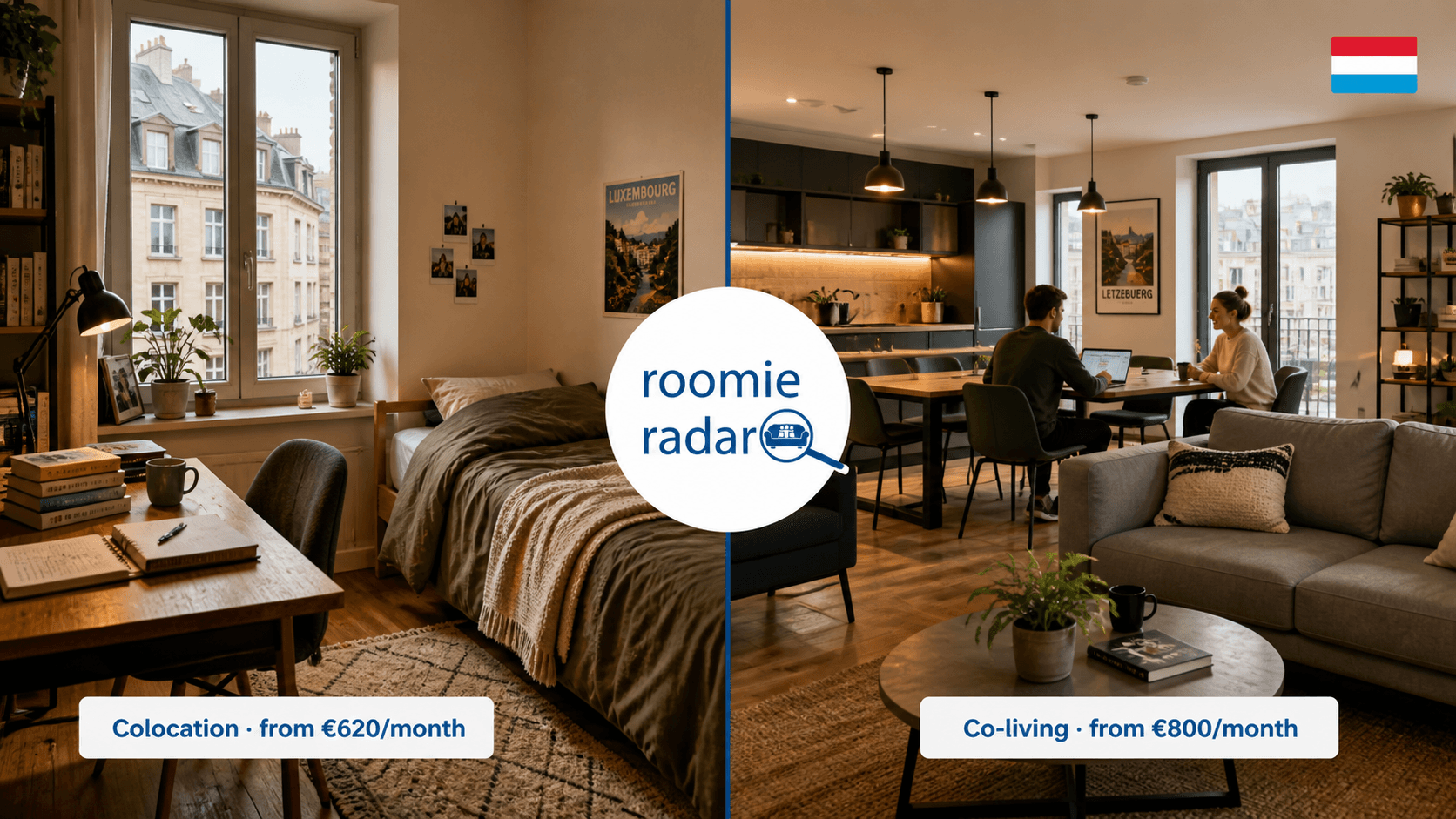
When you arrive in Luxembourg and start searching for a room, you quickly encounter two distinct markets. On one side, managed co-living in Luxembourg: polished listings, modern common areas, digital processes, all-inclusive pricing, move-in within days. On the other hand, the flatshare market: lower prices, more search friction, wider quality range — and a persistent question about whether the listing you're looking at actually exists.
The question we hear most from Roomie-Radar users before their first room search in Luxembourg is exactly this one: which is better, co-living or a private flatshare?
The direct answer is that neither is universally better. There are profiles of people for whom each makes clear sense. And there is a monthly price gap of €200–€400 that, annualised, becomes €2,400–€4,800. That is not a small detail.
Here is the honest comparison.
The Real Numbers: What Each Option Costs in 2026 💶
Before the nuance, the data:
Private flatshare in Luxembourg:
- Private room: €620–900/month depending on neighbourhood
- Utilities (electricity, water, internet): +€80–150/month unless all-inclusive
- Deposit: up to 2 months' rent (legal maximum)
- Average search time: 2–4 weeks
- Typical minimum duration: 6–12 months
Managed co-living in Luxembourg:
- All-inclusive: €800–1,200/month
- Utilities: included in monthly price
- Deposit: often reduced or waived
- Move-in time: typically days
- Typical minimum duration: 1–3 months
Shared accommodation in Luxembourg costs on average between €600 and €900 per month, while co-living sits between €800 and €1,200 per month.
Once you factor utilities into the flatshare calculation, the real monthly gap is €200–€400. Over 12 months, that difference amounts to €2,400–€4,800. For most expats in their first year in Luxembourg, that number matters.
Luxembourg Neighbourhoods for Expats: What Room You Can Actually Afford and Where to Search in 2026
What Each Option Actually Is (and Where People Get Confused) 🔍
Flatshare (colocation): Several people rent a flat together, with private bedrooms and shared common areas. The contract can be collective (all tenants sign together) or individual per room. Price is the lowest on the market, but finding the right place requires time and judgment.
Managed co-living: A company manages the property, rents individual rooms, includes services (wifi, water, electricity, sometimes common area cleaning), and standardises the move-in process. In co-living, all costs for water, electricity, gas, building fees, insurance, and internet are generally included in the monthly price, eliminating the need to set up and manage individual utility contracts.
What confuses many people: some private flatshares include all utilities and have individual room contracts — making them functionally very similar to co-living in terms of day-to-day management. The real difference is not just price but who manages the property: an individual landlord or a specialist company.
At Roomie-Radar, we list both formats. The platform is free for tenants regardless of whether the listing is from a private landlord or a co-living operator.
The Real Advantages of Co-living in Luxembourg ✅
Co-living isn't expensive for arbitrary reasons. There are concrete advantages that justify the premium for specific profiles.
Zero admin friction. No need to find compatible housemates, negotiate bill splits, open utility contracts, or manage a joint blocked bank account for the deposit. For someone arriving in Luxembourg with two weeks before their start date, this has genuine value.
Flexible contracts. Most co-living operators offer contracts from 1 or 3 months, renewable. For an expat on a work contract of uncertain duration, this reduces risk meaningfully. Co-living typically offers more flexible lease terms than traditional rentals, making it well-suited for people who move frequently or have uncertain exit dates.
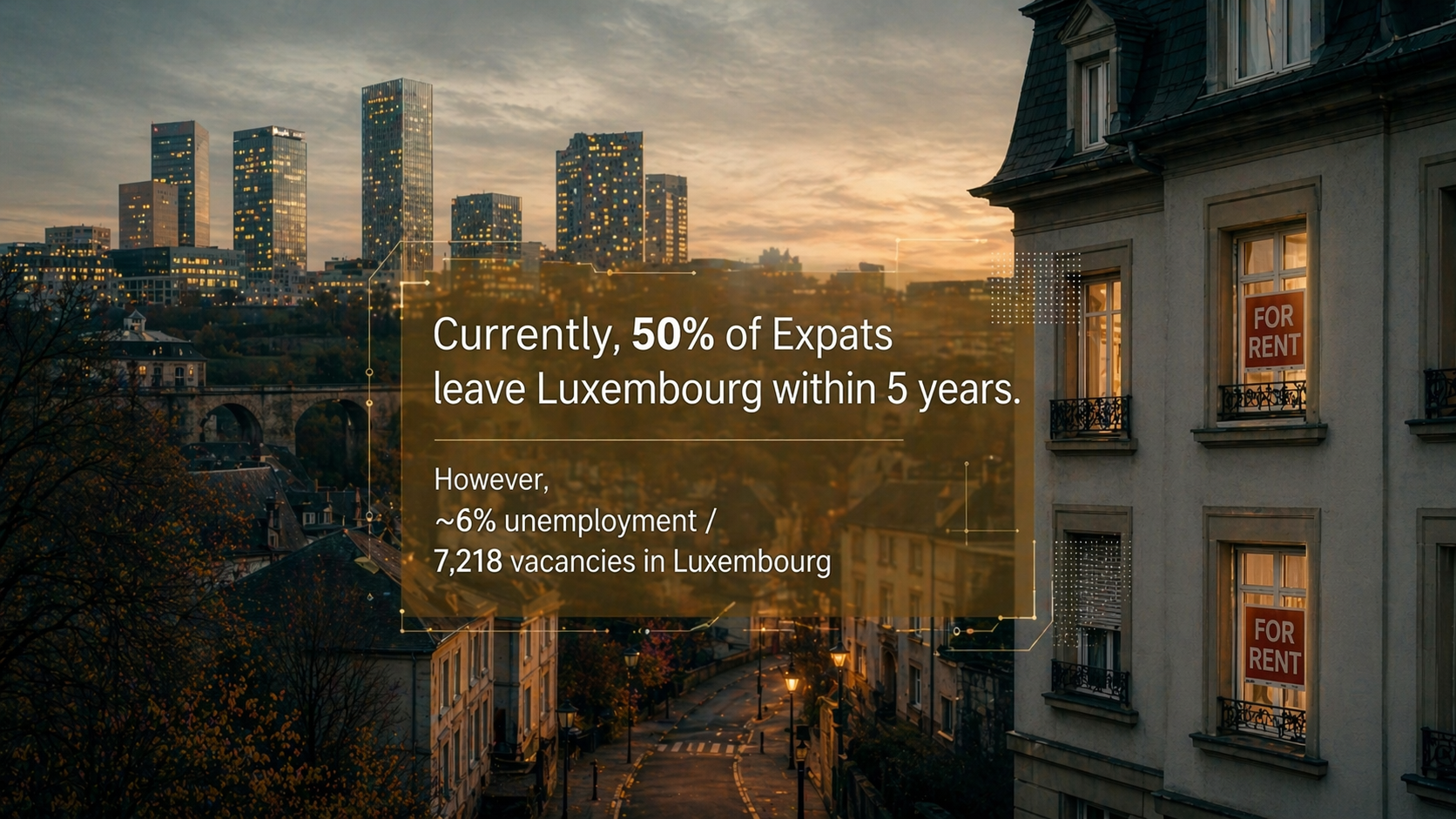
Immediate community. In a country where 50% of international talent leaves within five years — often due to isolation during the adaptation period — landing in an environment where people already exist to interact with has a value that doesn't appear in the monthly price.
Predictable move-in process. Book online, digital contract, keys on agreed date. No cancelled viewings, no unresponsive landlords, no weeks of uncertainty.
Luxembourg's Talent Paradox: Record Unemployment, Skills Shortages, and the Cost of Living That's Driving Expats Away
The Real Advantages of a Flatshare in Luxembourg ✅
A private flatshare isn't just for people who can't afford co-living. It's often the better choice for people who know what they're doing.
The price argument is the strongest one. Bonnevoie and Hollerich have the lowest room rents in Luxembourg City. A verified room in Bonnevoie at €680/month versus a co-living space at €1,050/month is a €370 monthly difference — €4,440 per year. That's a significant travel fund, or a meaningful emergency savings contribution.
More long-term stability. Private flatshare contracts typically run 6–12 months with the option of indefinite renewal. For someone who knows they'll be in Luxembourg for at least a year, this stability is preferable to rolling quarterly renewals.
More authentic living. Sharing a flat with people chosen by circumstance rather than by a company's matching algorithm produces more natural dynamics — both positive and unpredictable. For many expats, that's exactly what they want.
Broader market supply. The private flatshare market in Luxembourg is significantly larger than the managed co-living sector. More neighbourhoods, more price ranges, more types of property.
The challenge of a private flatshare is the search. Facebook groups like "Colocation et Location Ville de Luxembourg et alentours" have over 5,000 members and mix legitimate listings with questionable ones that require careful filtering. Without verified listings, a Facebook-only search can consume weeks and expose searchers to scams.
This is exactly why Roomie-Radar exists: to make the flatshare in Luxembourg option as accessible and safe as managed co-living — without the extra monthly cost.
The 2026 Master Guide: How to Rent a Room in Luxembourg Without Scams and the Power of Verification
The Comparison Table That Was Missing 📊

Why This Matters for Luxembourg Landlords Too 🔑
If you own rooms in Luxembourg and are deciding which format to offer, the question isn't which is generically better — it's which gives you more control and better leads as a landlord.
A private flatshare with individual room contracts, published on a platform with quality leads, offers the best of both worlds: you maintain a direct relationship with the tenant, set your own conditions, and access users who are actively searching with verified intent.
At Roomie-Radar, listing as a landlord is free. The user profile that arrives through the platform — over 85% expats with genuine urgency — is exactly the type of lead that minimises vacancy time between contracts.
How to Maximize Your Luxembourg Property ROI Through Co-living
The Verdict: Which One Is Right for You?
After tracking thousands of room searches in Luxembourg through Roomie-Radar, two clear profiles have emerged:
Choose co-living if: you're arriving in under 2 weeks, your stay is 3–6 months, you don't want to manage any utilities, and you value certainty over savings.
Choose a flatshare if: you have 3+ weeks to search, your stay exceeds 6 months, you're looking for the most competitive price on the market, and you're willing to invest time upfront for lower monthly costs.
And in both cases, use a platform with verified listings. The time you waste on fake Facebook listings doesn't appear in the monthly price — but it has a very real cost.
Conclusion
The co-living vs flatshare debate in Luxembourg has no single right answer. What does exist is a clear calculation: up to €4,800 in annual savings in favour of the flatshare, against weeks of saved search time and zero admin in favour of co-living.
On Roomie-Radar you'll find both options — verified across Luxembourg's most in-demand neighbourhoods. No agency fees, no commissions, no ghost listings. roomie-radar.com.
FAQ 📊
1. How much does co-living cost in Luxembourg in 2026?
Co-living in Luxembourg averages between €800 and €1,200 per month, all-inclusive — electricity, water, internet, and often common area cleaning. Price varies by neighbourhood, operator, and room type. Kirchberg and Belair sit at the upper end; Bonnevoie and areas further from the centre at the lower end.
2. How much does a shared room cost in a flatshare in Luxembourg in 2026?
A private room in a Luxembourg flatshare costs between €620 and €900 per month, excluding utilities. Utility costs (electricity, water, internet) typically add €80–€150/month unless the listing specifies all-inclusive. The most affordable neighbourhoods are Hollerich and Bonnevoie; the most expensive are Kirchberg and Belair.
3. What is the real difference between co-living and a flatshare in Luxembourg?
The fundamental difference isn't just price. In co-living, a company manages the property, includes all services, standardises move-in, and offers flexible contracts. In a private flatshare, an individual landlord rents rooms and the tenant manages (or shares management of) utility contracts. Co-living costs more but offers more certainty and less admin. A flatshare is cheaper but requires more time and initiative during the search.
4. Which is better for a short stay in Luxembourg — co-living or flatshare?
For stays of 1–6 months, co-living is usually more practical because minimum contract terms are shorter and move-in is immediate. Most private flatshares have 6–12 month minimum contracts — though Roomie-Radar does carry some shorter-term options. For stays exceeding 6 months, a flatshare generally offers better value for money.
5. Is it safe to look for a flatshare in Luxembourg through Facebook?
Facebook groups for colocation in Luxembourg have thousands of members but also a significant proportion of fraudulent listings — non-existent properties, inflated prices, deposit requests before viewings. The safest approach combines Facebook with platforms that carry verified listings, like Roomie-Radar. Never pay anything before confirming the listing and property are genuine.
6. Can I register my domicile in a co-living or flatshare in Luxembourg?
Generally, yes, but it depends on the operator or landlord. Domicile registration in Luxembourg is mandatory — required for social security, residency cards, and most administrative processes. Most managed co-livings allow it. In private flatshares, the landlord must authorise it.
7. What happens with the deposit in co-living vs flatshare in Luxembourg?
In a private flatshare, the legal deposit maximum is 2 months of base rent, typically managed via a blocked joint bank account. In managed co-living, many operators reduce the deposit or replace it with a one-month reservation fee — one of the practical advantages of the format. In both cases, the deposit must be returned at the end of the contract unless documented damage exists.
8. What is the average search time for a room in Luxembourg?
In managed co-living, the time from search to move-in is typically days to one week. In the private flatshare market, average active search time is 2–4 weeks — and can extend to 6 if the search is conducted exclusively through Facebook groups or general property portals. Properties in high-demand areas like Bonnevoie and Kirchberg typically stay listed for only 10 to 15 days. With verified Roomie-Radar listings, that search time reduces because time lost on fake or already-occupied listings is eliminated.
9. Does Roomie-Radar carry both co-living and flatshare rooms in Luxembourg?
Yes. Roomie-Radar lists both private flatshare rooms and co-living rooms in Luxembourg — verified, free for tenants, with clear information on price, minimum duration, included utilities, and domicile registration conditions. You can filter by format and neighbourhood directly at roomie-radar.com/rooms.